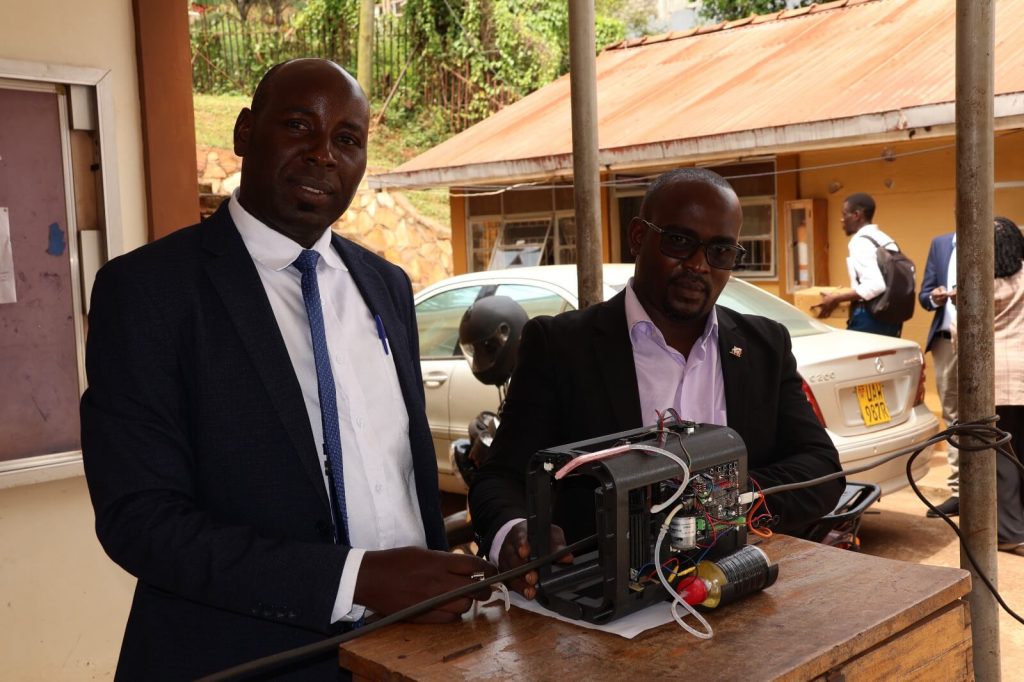
Engineering students from the Electrical and Mechanical Engineering programmes at Ndejje University showcased a range of innovative projects aimed at solving real-world challenges across infrastructure, agriculture, manufacturing, energy distribution, and public health during the 2025/2026 academic year projects exhibition.
The showcase highlighted the students’ creativity, technical competence, and commitment to developing practical solutions that respond to Uganda’s growing industrial and community needs.
Among the outstanding innovations presented was a Bridge Cleaning Robot developed by Mukubira Stephen and Kavule Vincent. The project seeks to improve the maintenance of suspension bridges by automating the cleaning of bridge cables, a process currently done manually and often labour-intensive. The students explained that the accumulation of dust and dirt on bridge cables can accelerate corrosion and compromise the structural integrity and appearance of bridges. Their software-controlled robot is designed to reach difficult areas with ease, improving efficiency and safety during maintenance operations. The innovation has potential application on major infrastructures such as the Express Highway bridge.
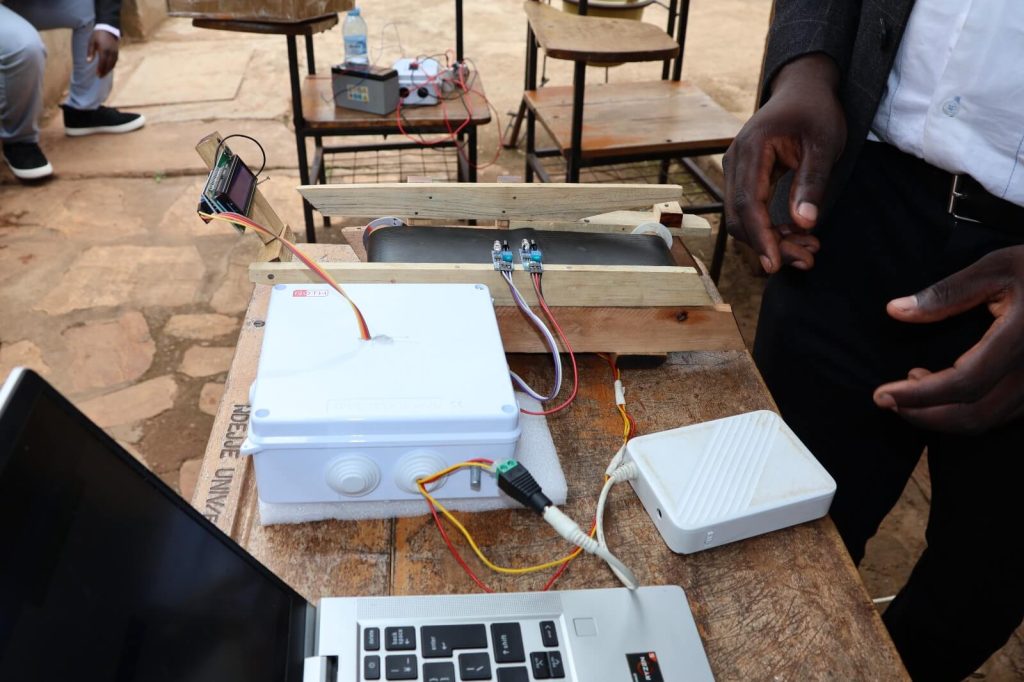
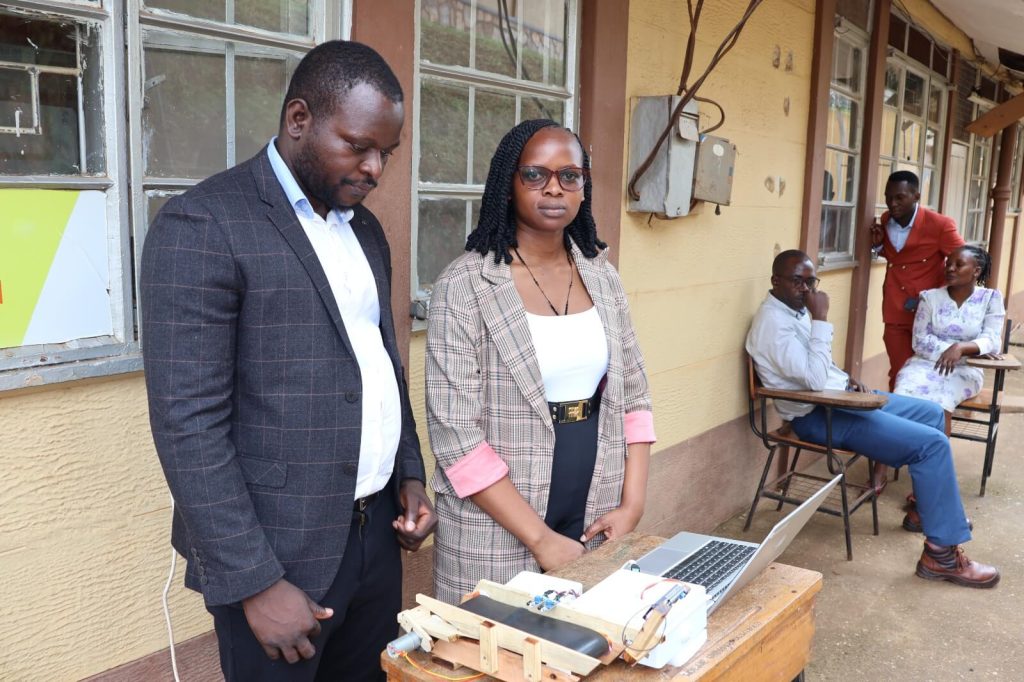
Another project attracting attention was the Automated Product Counting and Record System developed by Katusiime Betty and Enough Job. Designed for use in manufacturing and production environments, the system automatically counts products on conveyor belts while simultaneously recording and visualising stock data. The innovation enables businesses to make informed production decisions, track inventory levels, plan maintenance schedules, and assess opportunities for scaling operations. The students noted that the system saves time and enhances production efficiency through real-time monitoring and data management.
Banging Arnold and Sempebwa Abdul Rahman presented a Power Theft Detection and Monitoring System for Distribution Lines, aimed at addressing electricity theft and improving monitoring within power distribution networks. The system monitors current, voltage, and vibrations on distribution lines and sends real-time alerts in case of anomalies, outages, or suspected interference. Built using an ATmega328P microcontroller, the project integrates current sensors, voltage sensors, and piezo vibration sensors to provide utility operators with timely information and improved response capabilities.
In response to growing concerns over air quality and safety in urban eateries, Nangobi Proscovia and James Albert developed an Electronic Ventilation System for Local Restaurants in Uganda. The innovation detects dangerous levels of carbon monoxide and automatically alerts restaurant owners when ventilation is required. The students emphasized that the project is intended to improve working conditions and protect both customers and restaurant staff from carbon monoxide exposure. The system can also operate using solar power, making it suitable for areas with unreliable electricity supply.
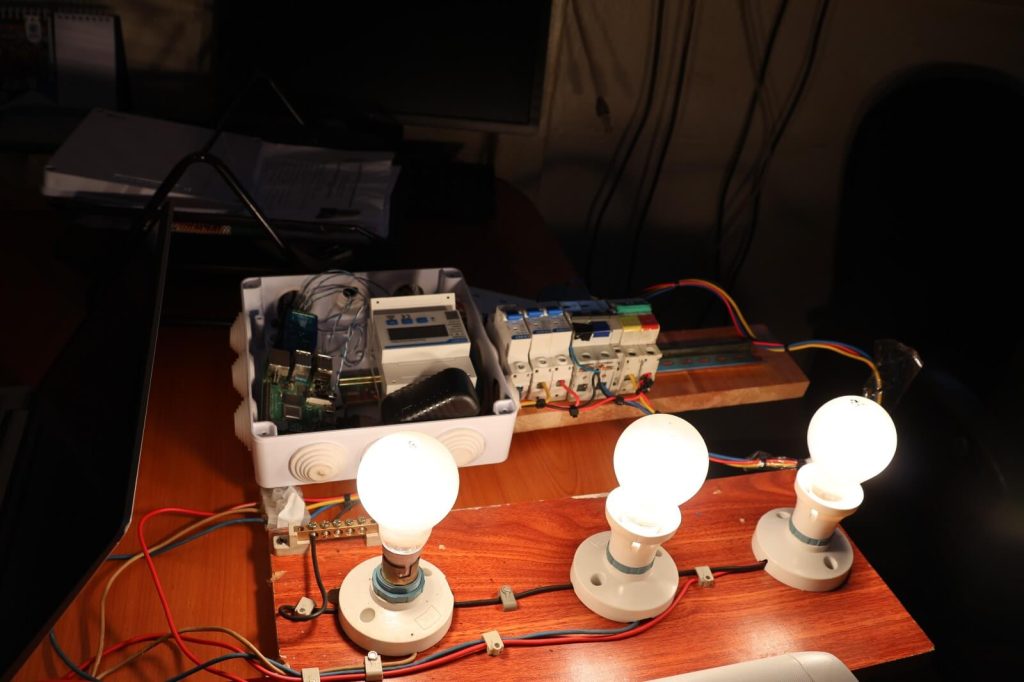
Peter Lubega and Wampamba Peter showcased a Real-Time AI-Powered Electricity Theft Detection System Using Edge Machine Learning on Raspberry Pi. The intelligent system detects anomalies and power bypass attempts within electricity networks and instantly alerts utility providers. Using edge machine learning, the project is capable of analysing abnormal patterns and generating rapid responses, demonstrating the growing role of artificial intelligence in enhancing energy management and security.
The exhibition also featured an agricultural innovation titled Design and Construction of a Pedalled Beans Threshing Machine by Edison Tindwesi and Florence Amogin. Recognising beans as one of Uganda’s widely cultivated food and income crops, the students designed the machine to reduce the manual labour and time involved in post-harvest processing. The project is expected to improve efficiency for farmers and contribute to increased agricultural productivity.
The projects exhibition reaffirmed Ndejje University’s commitment to promoting innovation, research, and hands-on learning that equips students with practical skills to address societal and industrial challenges