Bachelor of Laws
Program Overview
Legal education commenced in Uganda in January 1953. The Uganda Law Society, established in 1956, is the body in charge of Legal Education in Uganda. To become a lawyer in Uganda, one must have a Bachelor of Laws (LLB) undergraduate degree from a recognized university. It takes four (4) years to complete an undergraduate law degree in Uganda. Ndejje's Law Programme is set to provide instruction to students in the legal field in Uganda, as well as developing a hub of legal scholarship and research for students, academics, and researchers from Uganda, East Africa, and beyond.
Why Study this program at Ndejje University?
- Values-Based Legal Education: Ndejje integrates Christian principles with legal ethics, producing lawyers who are not only technically competent but also characterized by high integrity and social responsibility.
- Holistic Learning Environment: The university offers a serene, conducive environment away from the city's distractions, allowing for deep focus and rigorous academic research.
- Experienced Faculty & Mentorship: Students learn from a blend of seasoned legal practitioners and distinguished academics who provide a bridge between legal theory and courtroom reality.
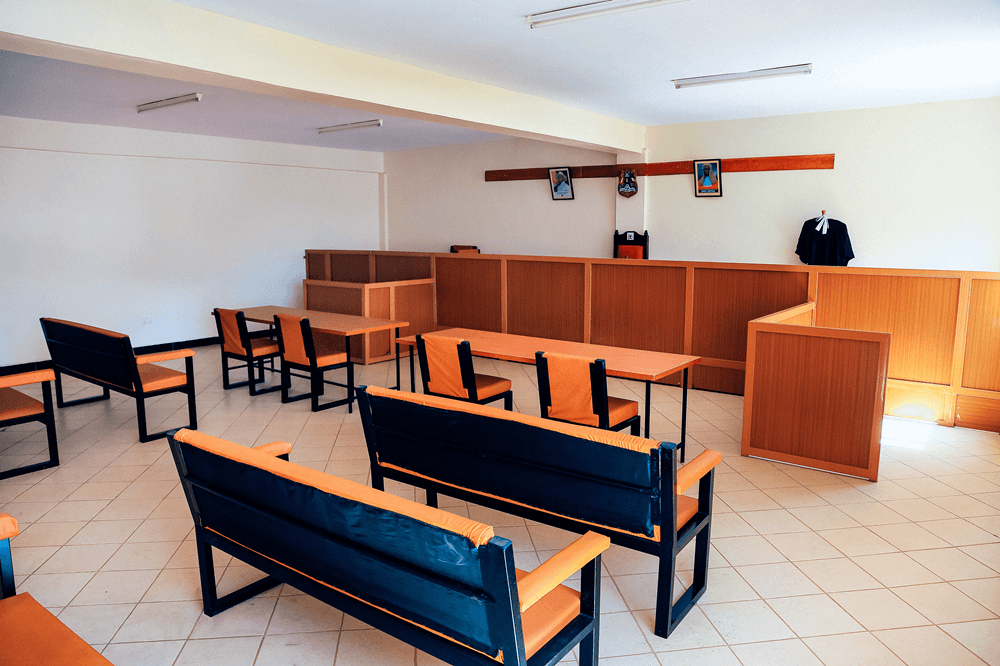
- Modern Infrastructure & Moot Courts: The university provides access to well-equipped libraries and dedicated moot court facilities where students can sharpen their advocacy and litigation skills in a simulated environment.
- Community & Pro-Bono Focus: There is a strong emphasis on social justice, encouraging students to engage with the community and understand the law's role in helping the marginalized.
Learning Outcomes
Graduates of Bachelor of Law program will be able to:
-
Conduct Advanced Legal Research: Efficiently locate, analyze, and apply statutes, case law, and scholarly articles to solve complex legal problems.
-
Demonstrate Core Legal Knowledge: Exhibit a comprehensive understanding of the substantive and procedural laws governing Uganda and international jurisdictions.
-
Exhibit Sharp Advocacy Skills: Present coherent, persuasive, and legally sound arguments both in written briefs and oral presentations (courtroom advocacy).
- Apply Ethical Reasoning: Identify and resolve ethical dilemmas in legal practice, adhering to the professional codes of conduct for advocates.
- Analyze & Draft Legal Documents: Competently draft contracts, legal opinions, pleadings, and other essential legal instruments with precision.
- Engage in Alternative Dispute Resolution (ADR): Demonstrate proficiency in mediation, negotiation, and arbitration as alternatives to traditional litigation.
Course Structure
- Legal Methods
- Principles of Constitutional Law
- Law of Contracts
- Criminal law
- Administrative Law
- Land Law
- Family Law
- Law of Torts
- Evidence Law
- Equity and Trusts
- Business Ethics
- Criminal Procedure
- Business Associations
- Jurisprudence
- Sale of Goods
- Environmental Law
- Civil Procedure
- Research Paper(Dissertation)
- Clinical legal education
- Revenue Law
- Human Rights
- Optional Courses (e.g. Intellectual Property)
Entry Requirements – Bachelor of Law
Direct Entry
- Uganda Certificate of Education (UCE) with at least 5 passes
- Uganda Advanced Certificate of Education (UACE) with two principal passes in relevant subjects.
Diploma Entry
- Relevant diploma in Law (Upper Second or Credit), recognized by NCHE
Mature Age Entry
- A minimum score of 50% in a recognized Mature Age Entry Examination
International Applicants
- Secondary school completion equivalent to Uganda’s A-Level
- Academic documents must be equated where necessary
- Proof of English proficiency if prior education was not in English
This Course includes:
How to get Admitted?
Follow the application process by submitting your academic documents and completing the university admission requirements.